

How to Tell if Silver Jewellery Is Real: 7 Easy Checks

Buying silver jewellery is an investment in beauty, quality, and timeless style. But how can you tell if a piece is genuine silver or just a silver-coloured imitation?
With so many plated and counterfeit products on the market, it’s important to know how to identify authentic sterling silver before making a purchase.
In this guide, we’ll walk you through 7 simple checks that can help you determine whether your silver jewellery is real.
Why Authentic Silver Matters
Genuine sterling silver offers several advantages over imitation jewellery:
- Long-lasting durability
- Hypoallergenic properties suitable for many sensitive skin types
- Timeless elegance and value
- Ability to be professionally polished and restored
- Better resistance to peeling or flaking compared to plated jewellery
If you’re unfamiliar with sterling silver, we recommend reading our guide:
→ What Is Sterling Silver? Everything You Need to Know About 925 Silver
1. Look for the 925 Hallmark
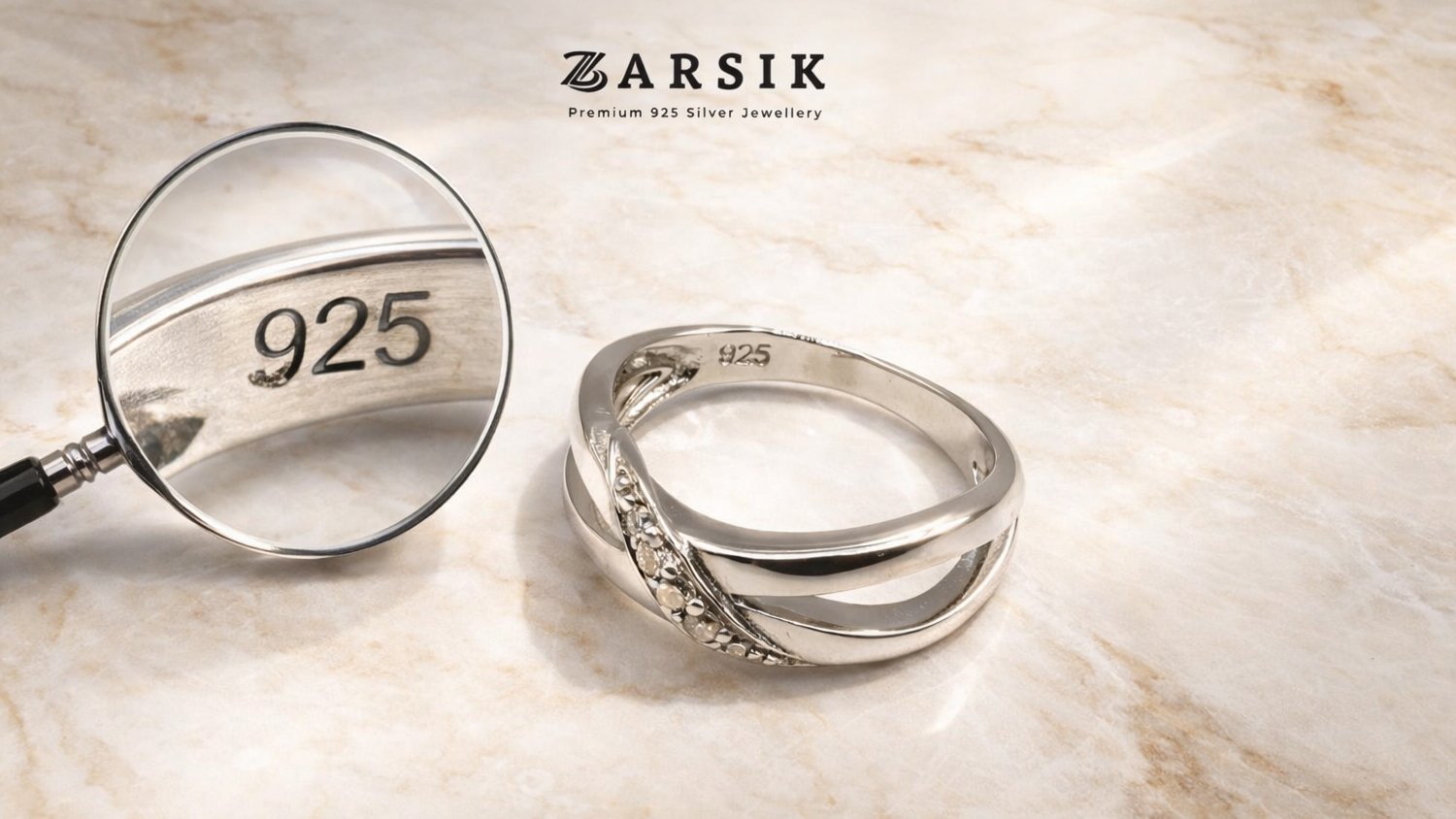
The easiest and most reliable first check is to look for a 925 stamp.
Sterling silver contains 92.5% pure silver and 7.5% strengthening metals, usually copper. Genuine sterling silver jewellery is often stamped with one of the following marks:
- 925
- S925
- Sterling
- Sterling Silver
You may find the hallmark:
- Inside rings
- On bracelet clasps
- Near necklace clasps
- On earring posts or backs
Important:
A hallmark alone doesn’t guarantee authenticity, but its absence should encourage further inspection.
2. Check for Tarnishing (Not Peeling)
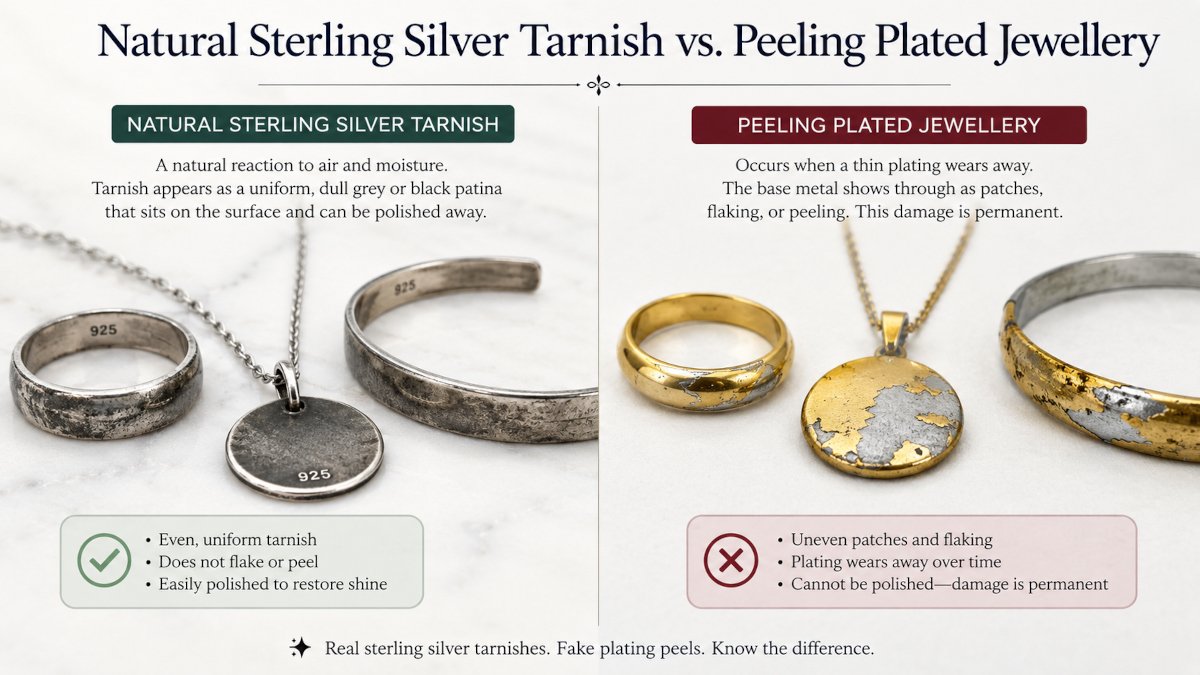
Many people assume tarnish is a sign of poor quality. In reality, genuine silver naturally reacts with air and moisture over time.
Real sterling silver may:
✔ Develop a slight darkening or tarnish
✔ Return to its original shine when polished
Fake silver or low-quality plating often:
✘ Peels
✘ Flakes
✘ Reveals a different metal underneath
If the silver coating is coming off, the piece is likely plated rather than solid sterling silver.
3. Use a Soft Cloth Test
Take a clean, soft polishing cloth and gently rub the jewellery.
Authentic silver often leaves a slight black or grey residue on the cloth because polishing removes small amounts of natural silver tarnish.
If no residue appears, it doesn’t automatically mean the piece is fake—but if combined with other warning signs, it may be worth investigating further.
4. Check for Magnetic Attraction
Silver is not magnetic.
You can perform a quick test using a strong household magnet.
Results:
- No attraction = Good sign
- Strong attraction = Likely not sterling silver
Keep in mind that some jewellery contains clasps or components made from other metals, so this test should not be used alone.
5. Listen to the Sound
Silver produces a distinctive, clear ringing tone when gently tapped against another metal object.
Real sterling silver typically creates:
- A bright, high-pitched sound
- A longer-lasting ring
Base metals often produce:
- A dull sound
- A short, flat clink
This test requires some experience but can provide additional clues.
6. Inspect the Weight and Feel
Silver is denser than many inexpensive metals.
When you hold a genuine sterling silver piece, it often feels:
- Solid
- Smooth
- Substantial for its size
Counterfeit jewellery may feel:
- Unusually light
- Hollow
- Rough around edges and joins
Premium silver jewellery should also display high-quality craftsmanship with clean finishing and secure stone settings.
7. Buy From a Trusted Seller
The most reliable way to ensure authenticity is purchasing from a reputable jeweller that clearly states:
- Metal purity
- Hallmark information
- Product specifications
- Return policies
- Authenticity guarantees
At ZARSIK, every sterling silver piece is carefully selected and clearly identified, giving customers confidence in the quality of their jewellery.
Signs That Silver Jewellery May Be Fake
Be cautious if you notice:
- No hallmark or purity stamp
- Peeling silver coating
- Rust or green discoloration
- Strong magnetic attraction
- Extremely low prices that seem unrealistic
- Missing metal composition information
One warning sign alone doesn’t confirm a fake, but multiple signs should prompt further investigation.
Frequently Asked Questions
Does real silver tarnish?
Yes. Genuine sterling silver naturally tarnishes over time due to exposure to air and moisture. Tarnish is normal and can usually be removed with proper cleaning.
Can fake silver have a 925 stamp?
Unfortunately, yes. Counterfeit jewellery can be stamped with fake hallmarks. That’s why multiple authenticity checks are important.
Is sterling silver suitable for sensitive skin?
Many people with sensitive skin wear sterling silver comfortably because it contains a high percentage of pure silver. However, individual sensitivities can vary.
How long does sterling silver last?
With proper care, genuine sterling silver jewellery can last for decades and even generations.
Final Thoughts
Learning how to identify genuine silver jewellery can help you avoid disappointment and make informed purchases.
The good news is that most authenticity checks are simple and can be done at home. Look for the hallmark, inspect the finish, test magnetism, and purchase from trusted jewellers who stand behind their products.
When cared for properly, authentic sterling silver jewellery offers lasting beauty, elegance, and value for years to come.
Explore ZARSIK’s collection of premium 925 sterling silver jewellery and experience the difference genuine silver makes.

Asking questions are genuinely pleasant thing if you are not understanding something completely, but this piece of writing gives fastidious understanding even.